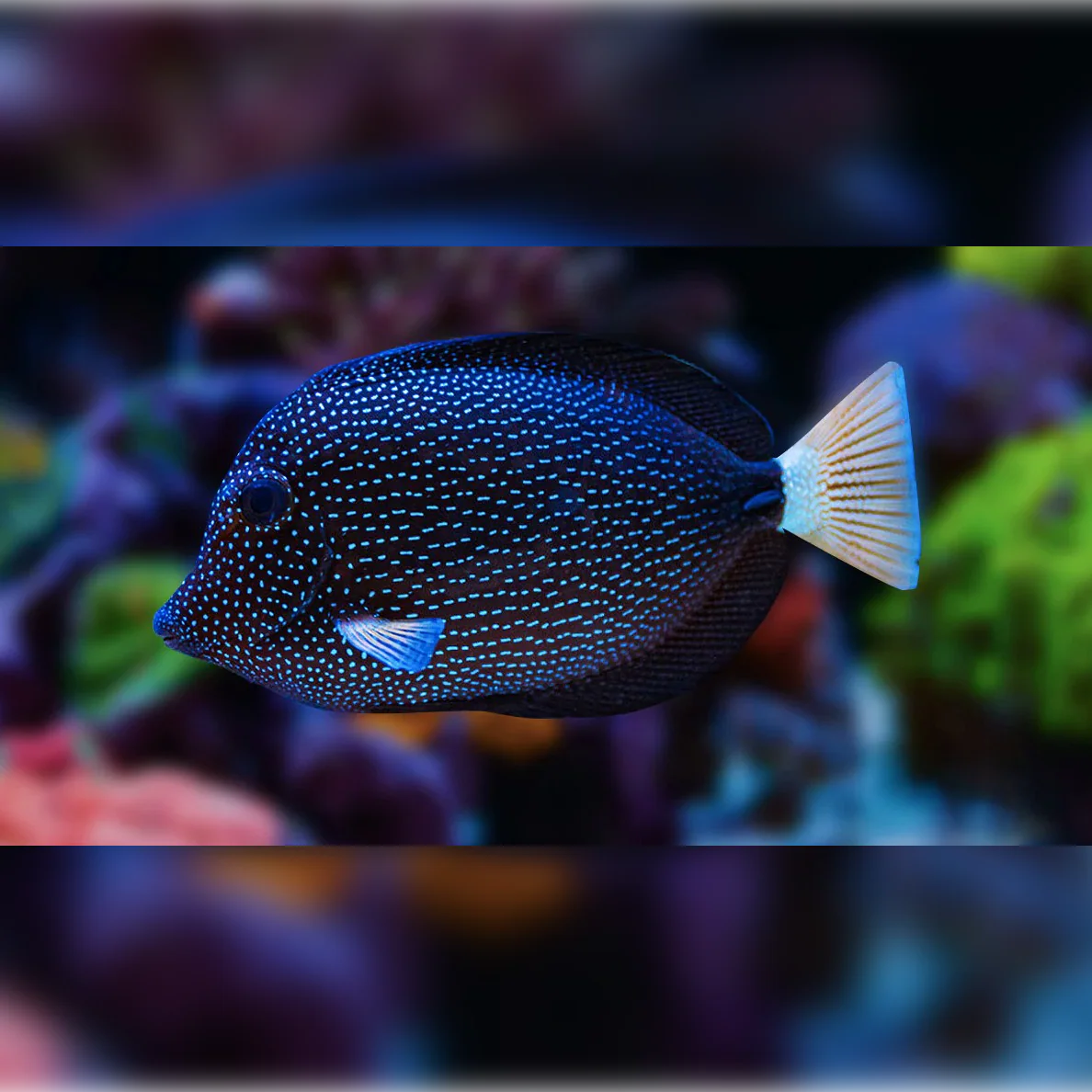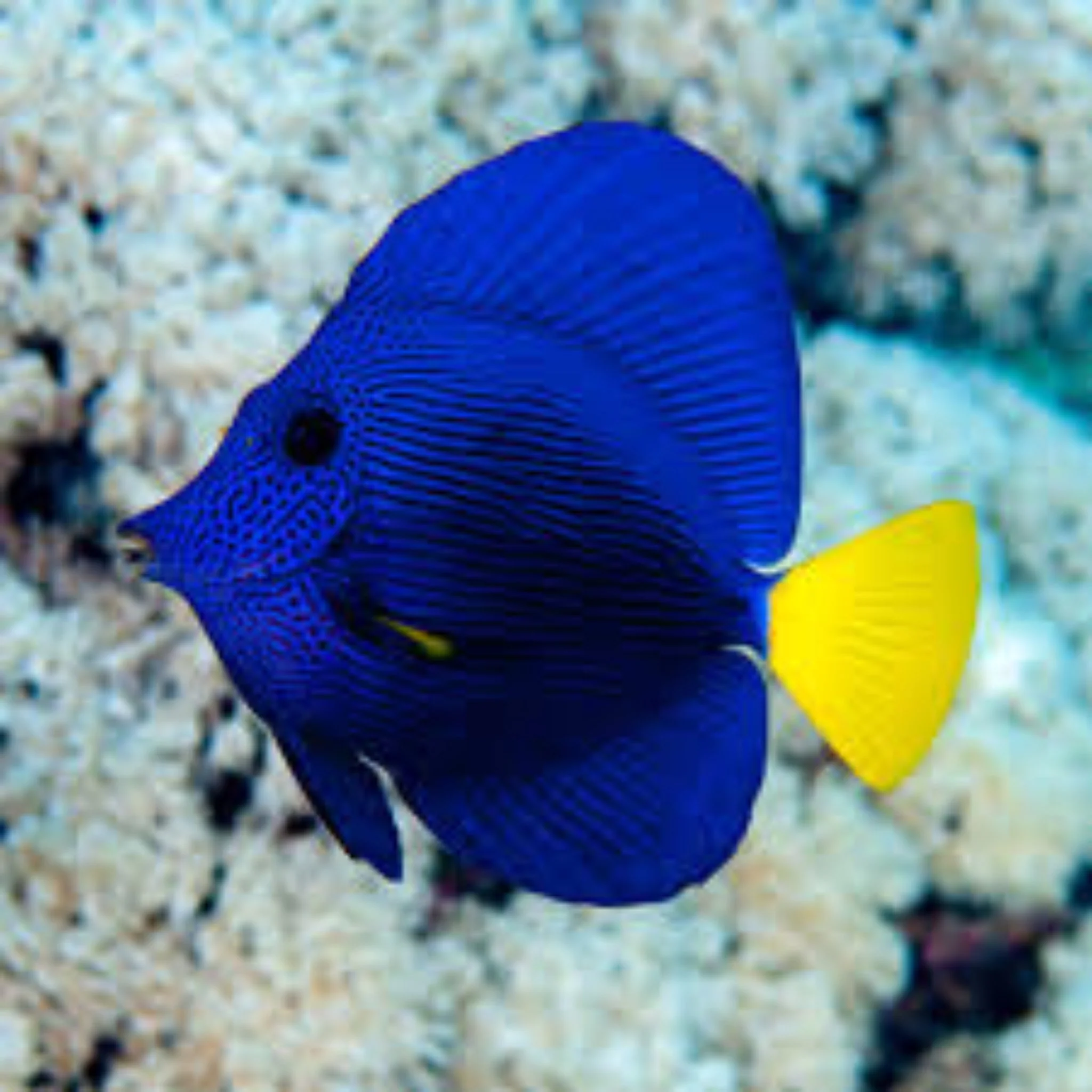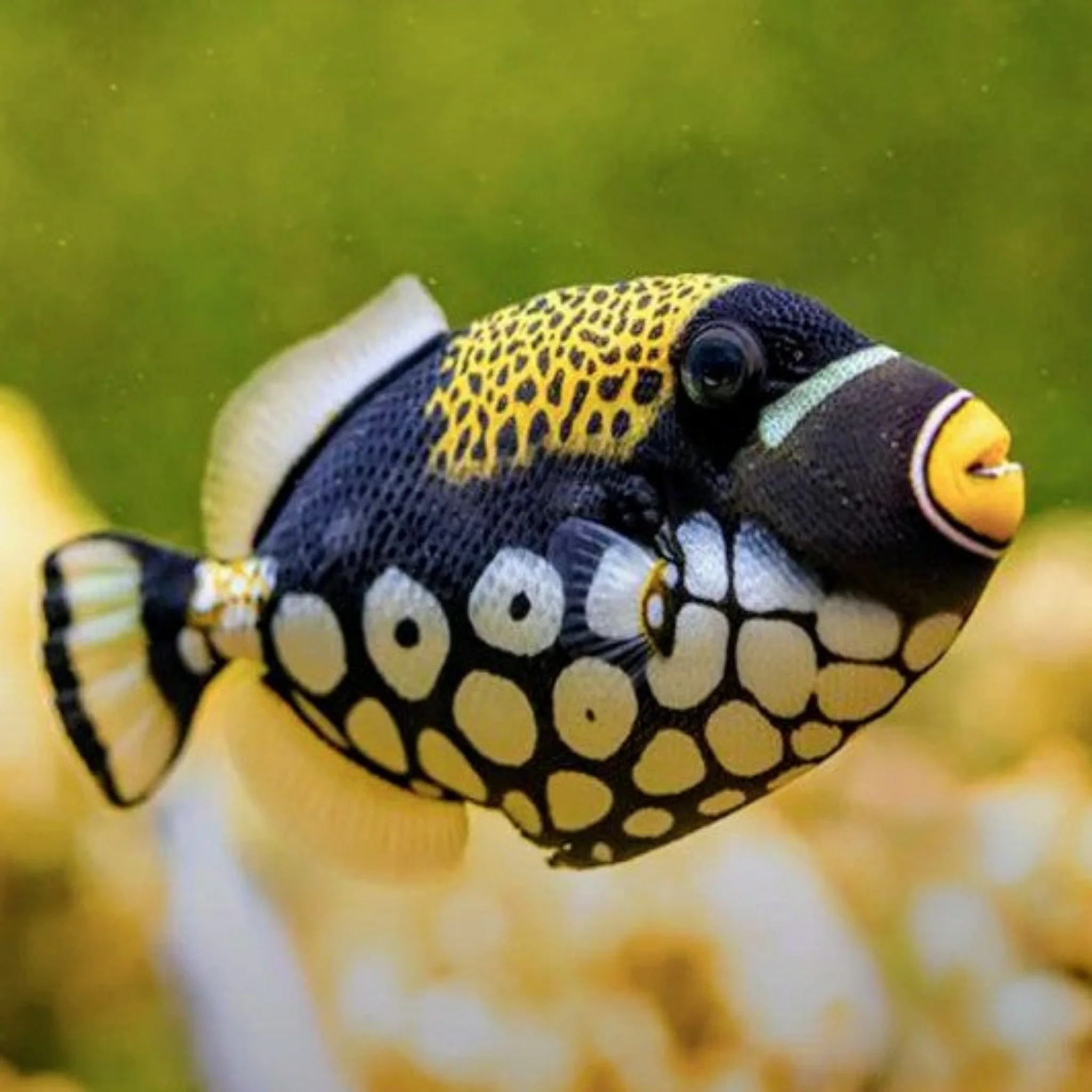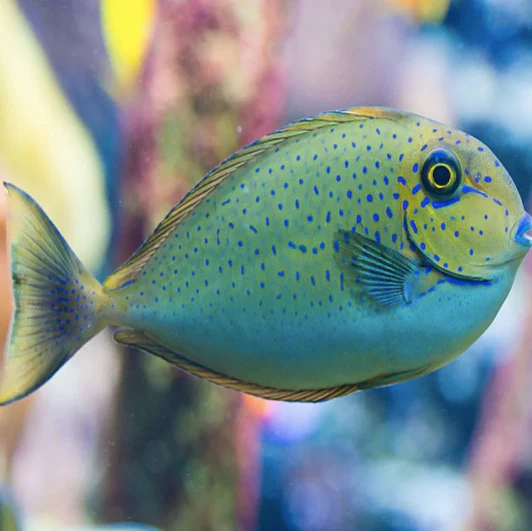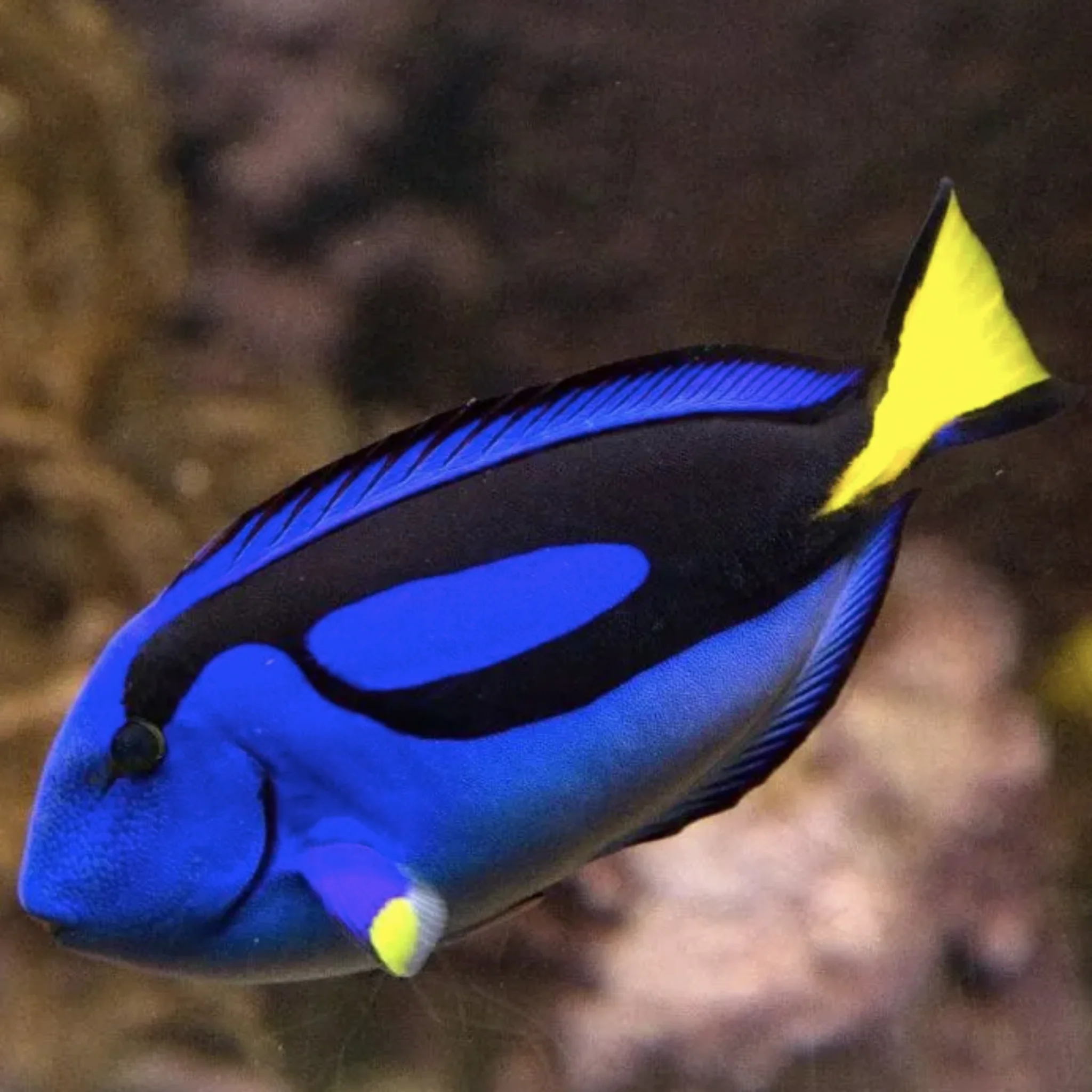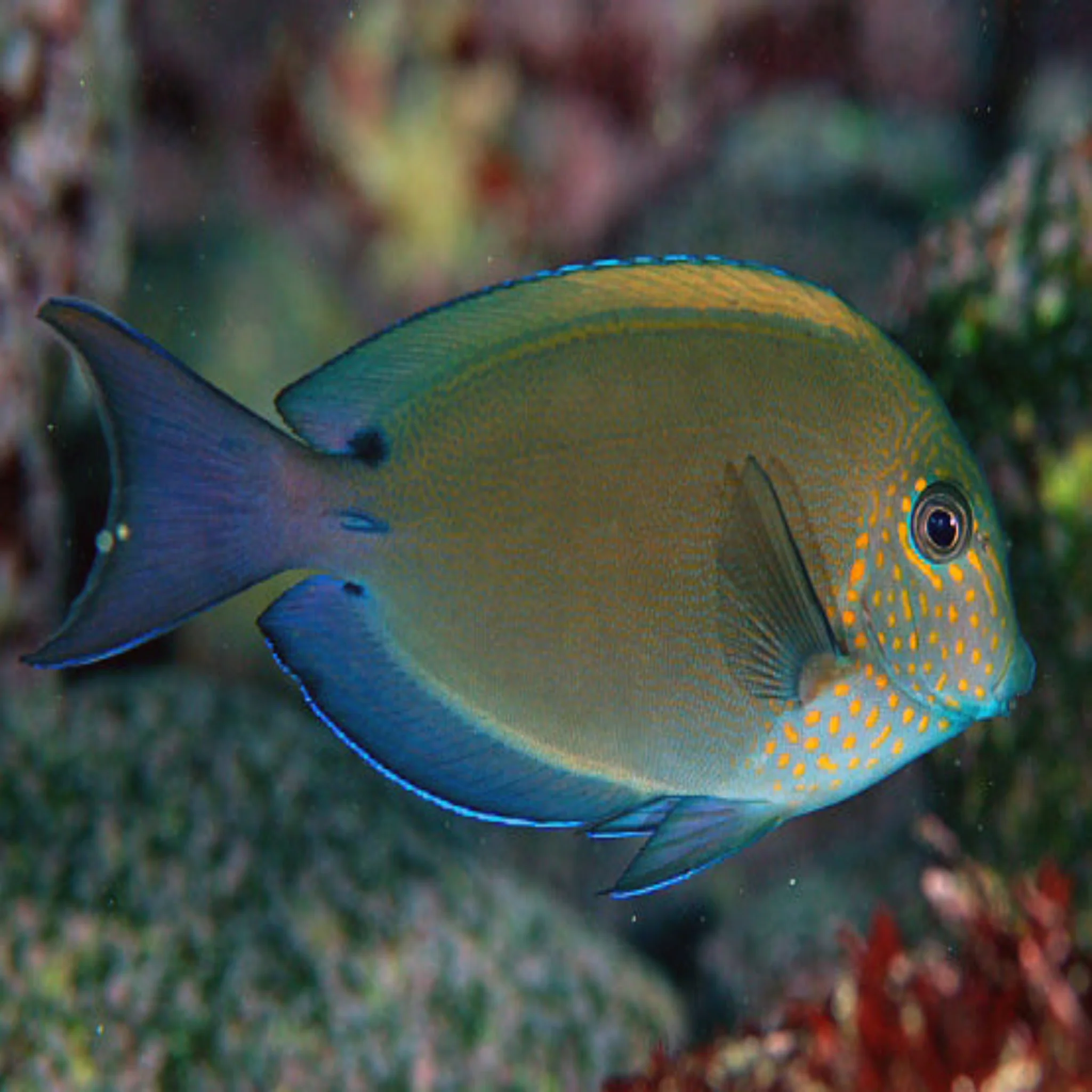
Nigrofuscus Tang
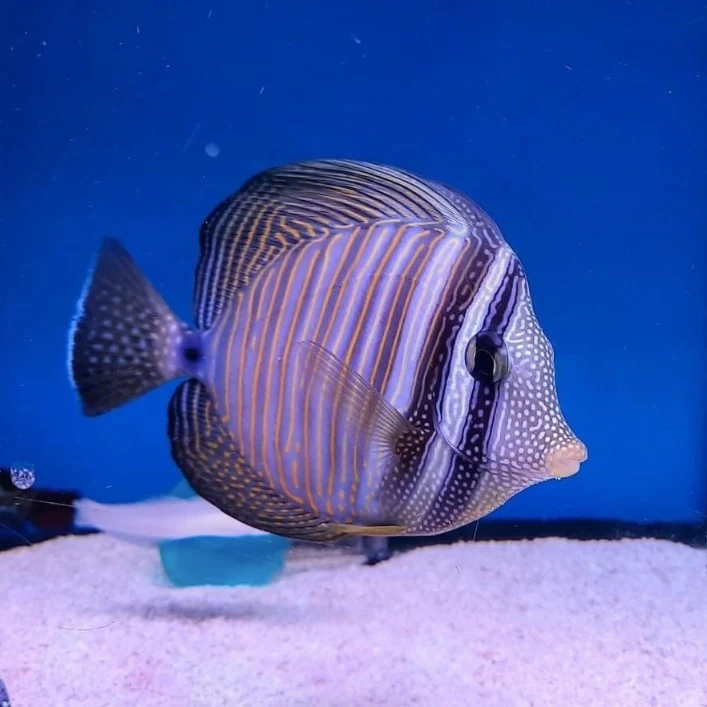
The Acanthurus nigrofuscus, or Lavender Tang, requires a large, well-established marine aquarium with strong water flow and plenty of live rock for grazing. Its diet must be varied and primarily herbivorous, supplemented with algae-based foods like Nori, Spirulina, and vegetables, and fed multiple times a day. Moderate care is needed to maintain stable water parameters.
Aquarium and environment Minimum Tank Size: (500\) L)
Water Flow:
Requires turbulent, well-oxygenated water flow, provided by power heads Live
Rock:
A significant amount of live rock is essential for the fish to graze on algae in between feedings Aquascaping: Include hiding places, especially for newly introduced fish.
Diet and feeding Frequency:
Feed 3 times per day Primary Diet: Primarily a herbivore, so a large portion of its diet should be vegetable matter.
Food options:Algae sheets (Nori) and other dried seaweed Spirulina Frozen herbivore rations Flake and pellet foods Vegetables such as cucumber and broccoli Supplements: Vitamin supplements can be beneficial

Product Information
Product Information
Shipping & Returns
Shipping & Returns
Description
The Acanthurus nigrofuscus, or Lavender Tang, requires a large, well-established marine aquarium with strong water flow and plenty of live rock for grazing. Its diet must be varied and primarily herbivorous, supplemented with algae-based foods like Nori, Spirulina, and vegetables, and fed multiple times a day. Moderate care is needed to maintain stable water parameters.
Aquarium and environment Minimum Tank Size: (500\) L)
Water Flow:
Requires turbulent, well-oxygenated water flow, provided by power heads Live
Rock:
A significant amount of live rock is essential for the fish to graze on algae in between feedings Aquascaping: Include hiding places, especially for newly introduced fish.
Diet and feeding Frequency:
Feed 3 times per day Primary Diet: Primarily a herbivore, so a large portion of its diet should be vegetable matter.
Food options:Algae sheets (Nori) and other dried seaweed Spirulina Frozen herbivore rations Flake and pellet foods Vegetables such as cucumber and broccoli Supplements: Vitamin supplements can be beneficial